【SAVAGES】TYPE-571 Fusion Tug
Lenth: 2.72km
Wet mass, with cargo: 406,000 tonnes
Dry mass, clean: 210,000 tonnes
Dry mass, with crew and passengers: 240,000 tonnes
Payload: 110,000 tonnes
Fuel, liquid deuterium: 620 tonnes
Fuel, LH2: 55,180 tonnes
D/H mass ratio: 1:89
Fuel consumption, outbound, cargo: 22,000 tonnes
Fuel consumption, inbound, crew and passengers: 34,000 tonnes
Fusion power: 12TW
Power-to-Mass ratio, clean: 57.1kW/kg
Effective power for propulsion: 4TW
Isp, pure fusion: 468,000s
Isp, afterburner: 49,000s
Afterburner thrust: 1,670 tonnes
TWR, outbound, loaded: 4.11mG
TWR, inbound: 6.09mG
Outbound Δv budget: 26,740m/s
Inbound Δv budget: 63,590m/s
Usable Δv, fully loaded(110,000 tonnes payload): 71,200m/s
Usable Δv, crew and passenger only: 100,660m/s
Wet mass for Europa cargo mission: 340,000 tonnes
Cargo capacity for heavy element: 90,000 tonnes
Total volume of main liquid tank: 5,475,300 cubic meters
Usable volume of of main liquid tanks: 4,079,600 cubic meters
Energy total loss (waste heat): 53.5%
Energy loss of bremsstrahlung radiation: 13.1%
Energy loss of 2.54MeV neutron (from D-D fusion): 33.6%
Energy loss of 14.1MeV neutron (from D-T fusion): 6.8%
Total waste heat: 6.42TW
Blocked by the structure: ~10%
Grazed by the structure: ~50%
Remaining waste heat load: 330GW
Blade shield maximum temperature: ~2,500K
Blade shield capacity: ~37GW
Radiator maximum temperature: ~1,700K
Dimension of radiator: 2×2×150×1,100m, total area 660,000 square meters
Radiator capacity:313GW (20GW capacity as redundancy)
Axial Magnetic Field Density:~20T
β Ratio:≈0.5
Fusion Average Ion Temperature:~272.6keV
Equilibrium Electron Temperature:~149.2keV
Average Electron Density:1.18*10^21 m^-3
Average Plasma Density:3.82*10^-6 kg•m^-3
Fusion Plasma Volume:>112000 m^3
Fusion Chamber Length:1100m
Fusion Chamber Typical Cross Section:101m^2
Magnetic Energy Held in Coils:>17.7TJ’
Framework stain energy: 1MJ/kg, coil framework mass: ~20,000 tonnes

The Type-571 fusion transporter vessel is a large-scale fusion cargo vessel that mass produced in late 22nd century, taking the absolutely advantages of market in the bulk commodity transport due to its highly economic
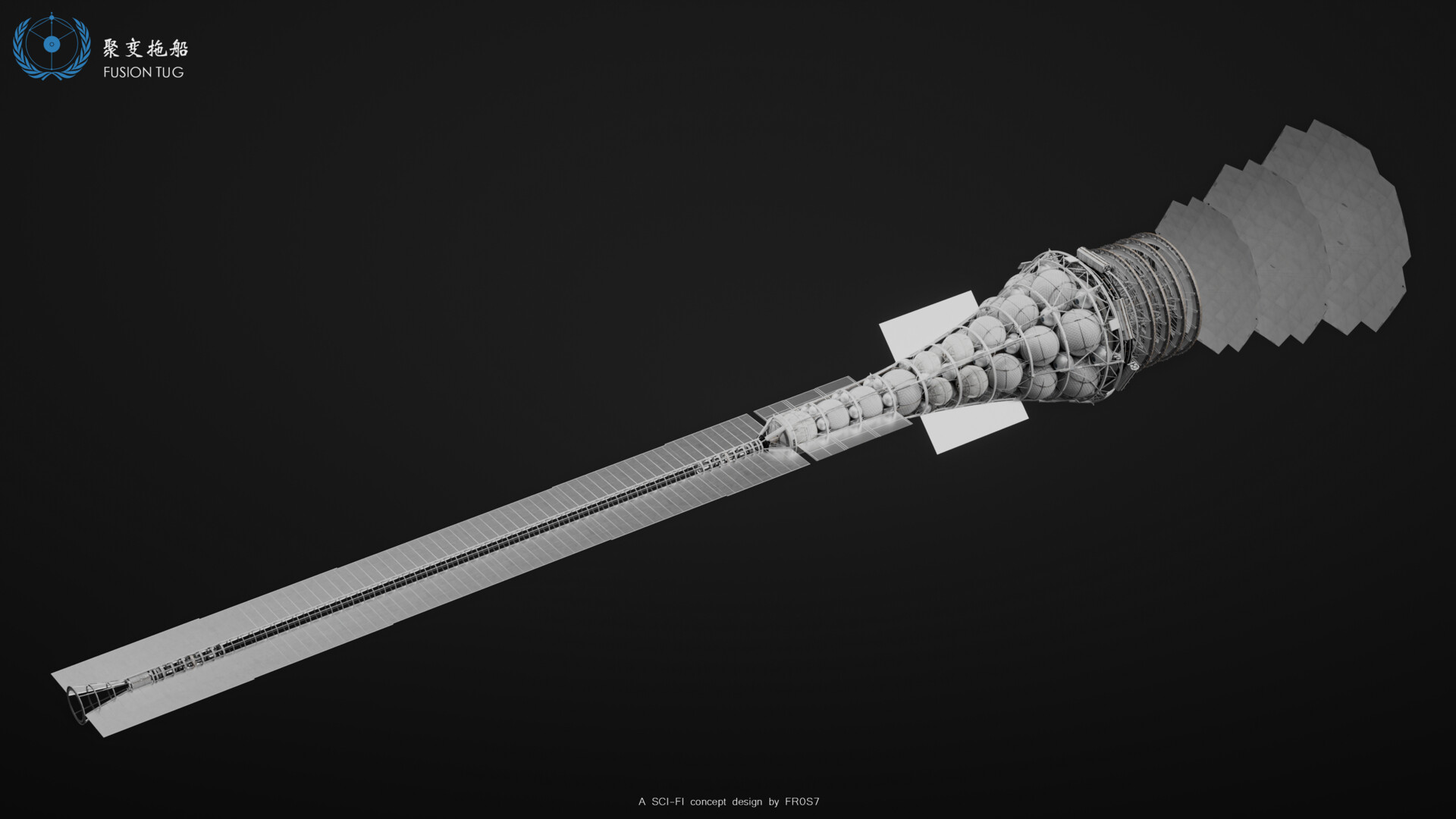
The framework at the bow allowed different payload and module to be installed, making the ship versatile for a wide range of scenarios

the standard configuration of Type 571 fusion transporter vessel only contained follow components: propulsion system, propellant tanks and frameworks, basic RCS thrusters and other flight control system
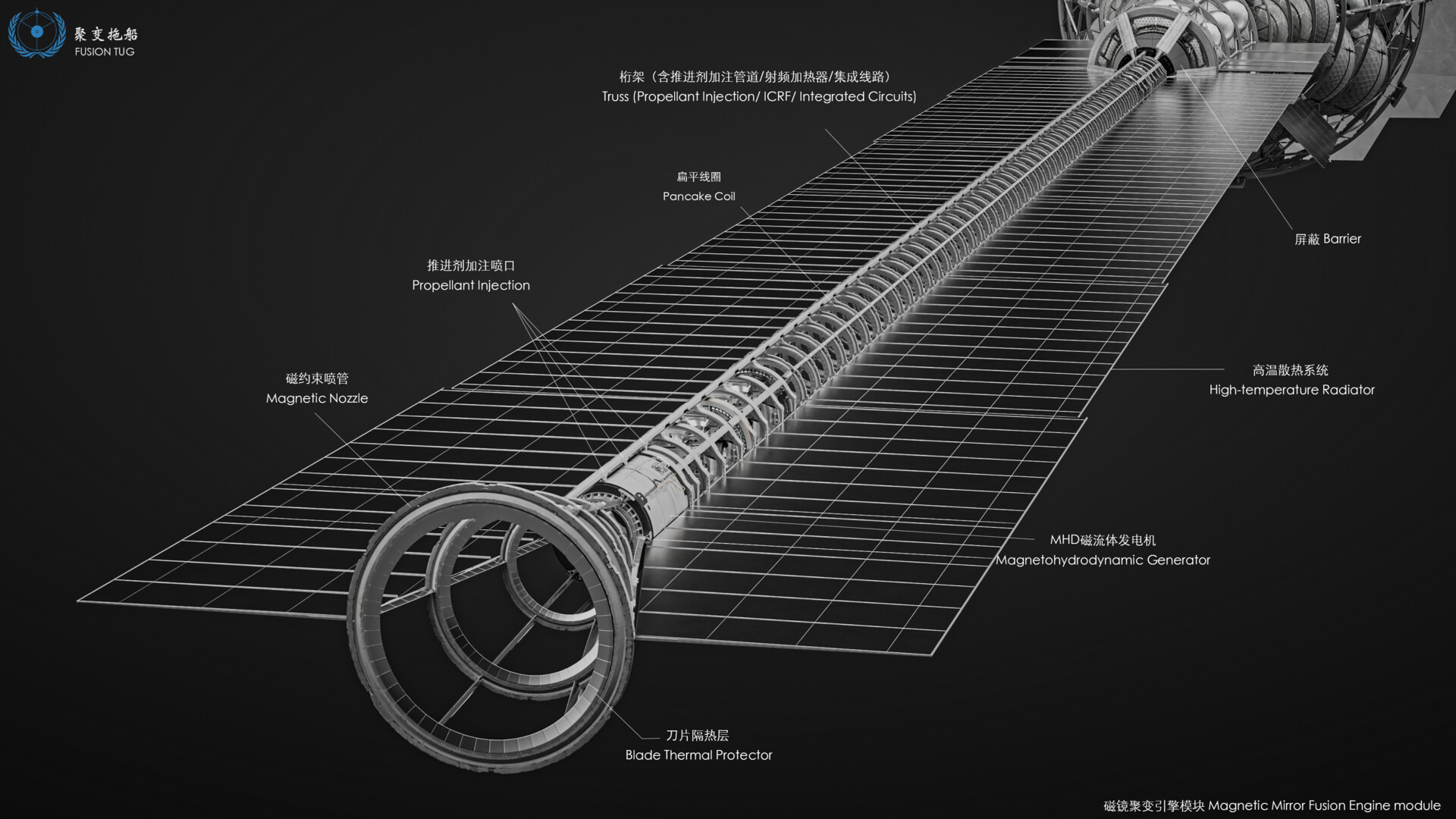
The core of Type 571 fusion tug is a massive, improved tandem steady magnetic mirror fusion propulsion system. For economy and the require of strategic material controls, the civilian fusion drives in Mercury and Earth spaces are only allowed to using DD
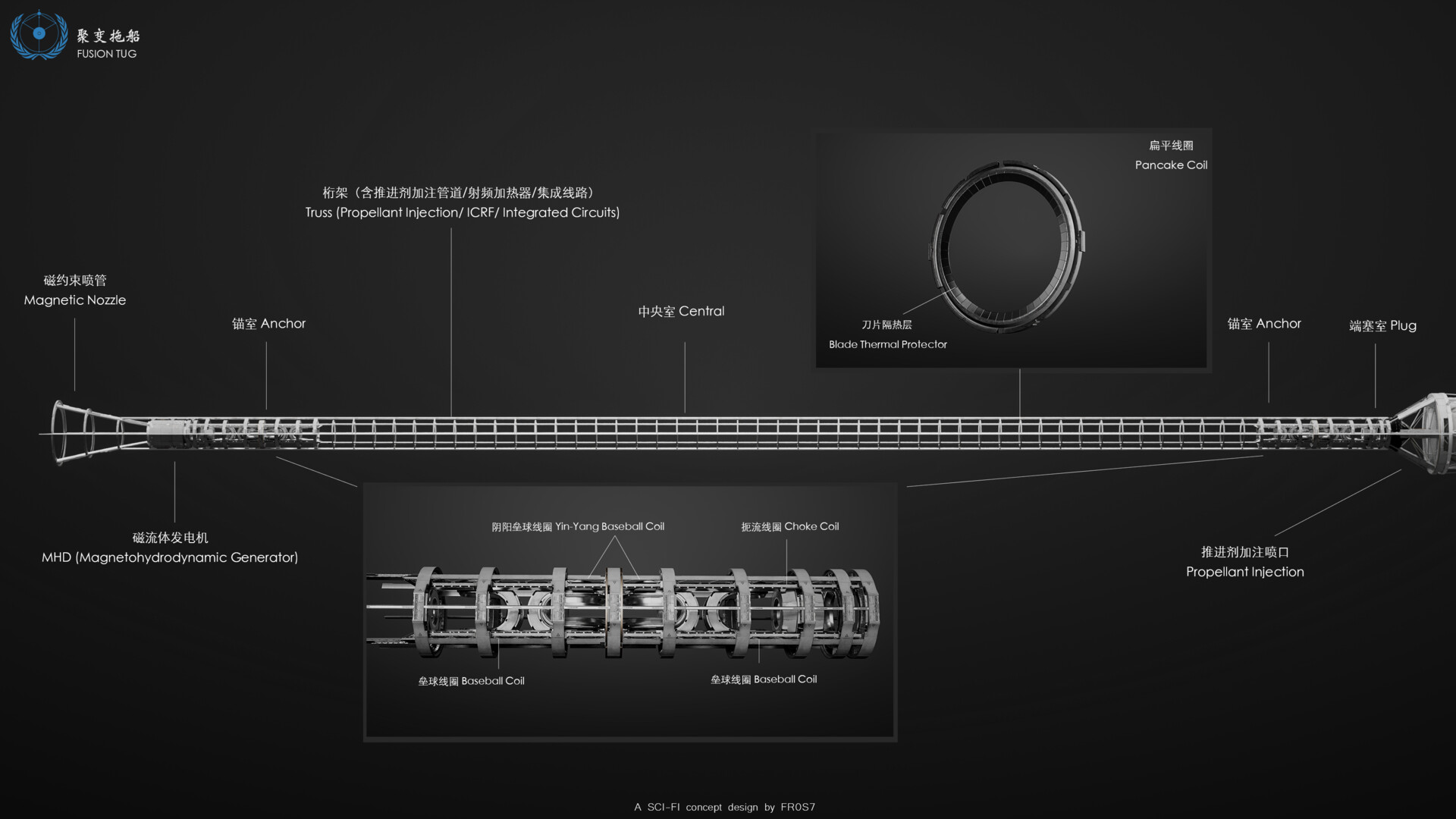
The total mass of the ship’s propulsion system and radiators are over 100,000 tonnes. All surfaces that will contacted with the plasma are protected by the blade shield, to keep the coil and structure components from being damaged by high-E neutron flow

In the observation with the naked eyes, the reacting plasma will be white due to bremsstrahlung radiation, and the relatively cooler area at the edge will be violet.

When in pure fusion exhaust the exhaust flame, as well as using hydrogen as the afterburner propellant, the flame will be purplish red. When using water as the afterburner propellant, the flame will be pink, and yellow if using oxygen.

The tanks of the ship are massive, with over 4m cubic meters of usable volume. The tanks are made with advanced high-strength composite material, with extreme thin skins, and near prefect manufacture technique, with potential interstellar capability


Oversea students, technical and government personnels that traveling from the belt to the Earth space are eligible to take such transportation flights, a small number of Earth tourists could also take the transport ship to the asteroid belt.

The maintenance requirement of fusion transport ship is relatively higher. The construction and complete maintenance abilities are limited in only large harbor in Earth space

Typically, due to the economy concerns, when carrying liquid, resource blocks and bulk cargos, the ship will choosing the orbit that minimize the fuel consumption and Δv requires, like Hohmann transfer or spiral trajectories in long transfer period
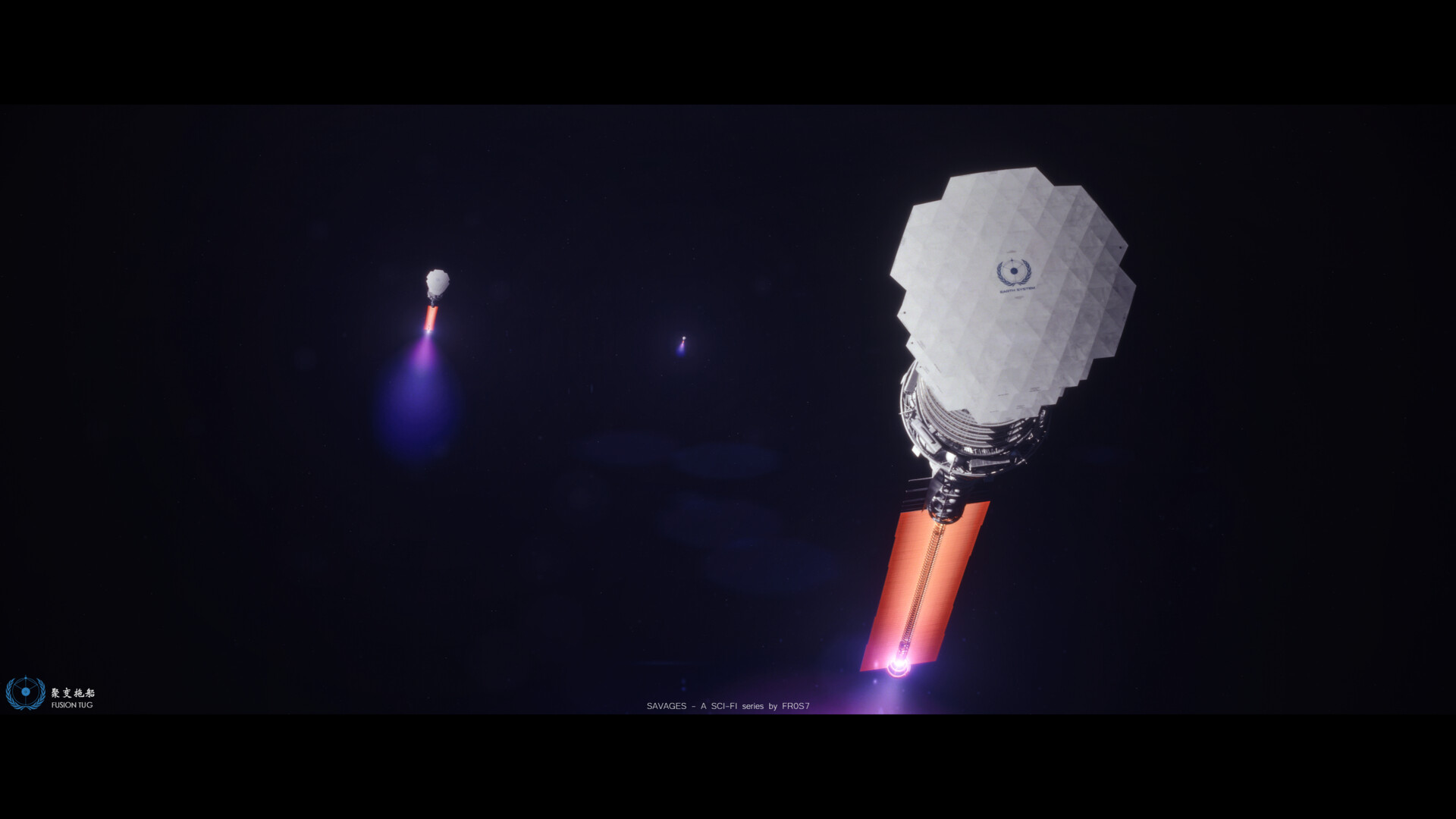
When carrying personnel it will required the ship to transfer as quick as possible. In some special scenarios, the ship could choose a brachistochrone trajectory, with the engine burning during the entire transfer phase, to minimized the flight time ASAP
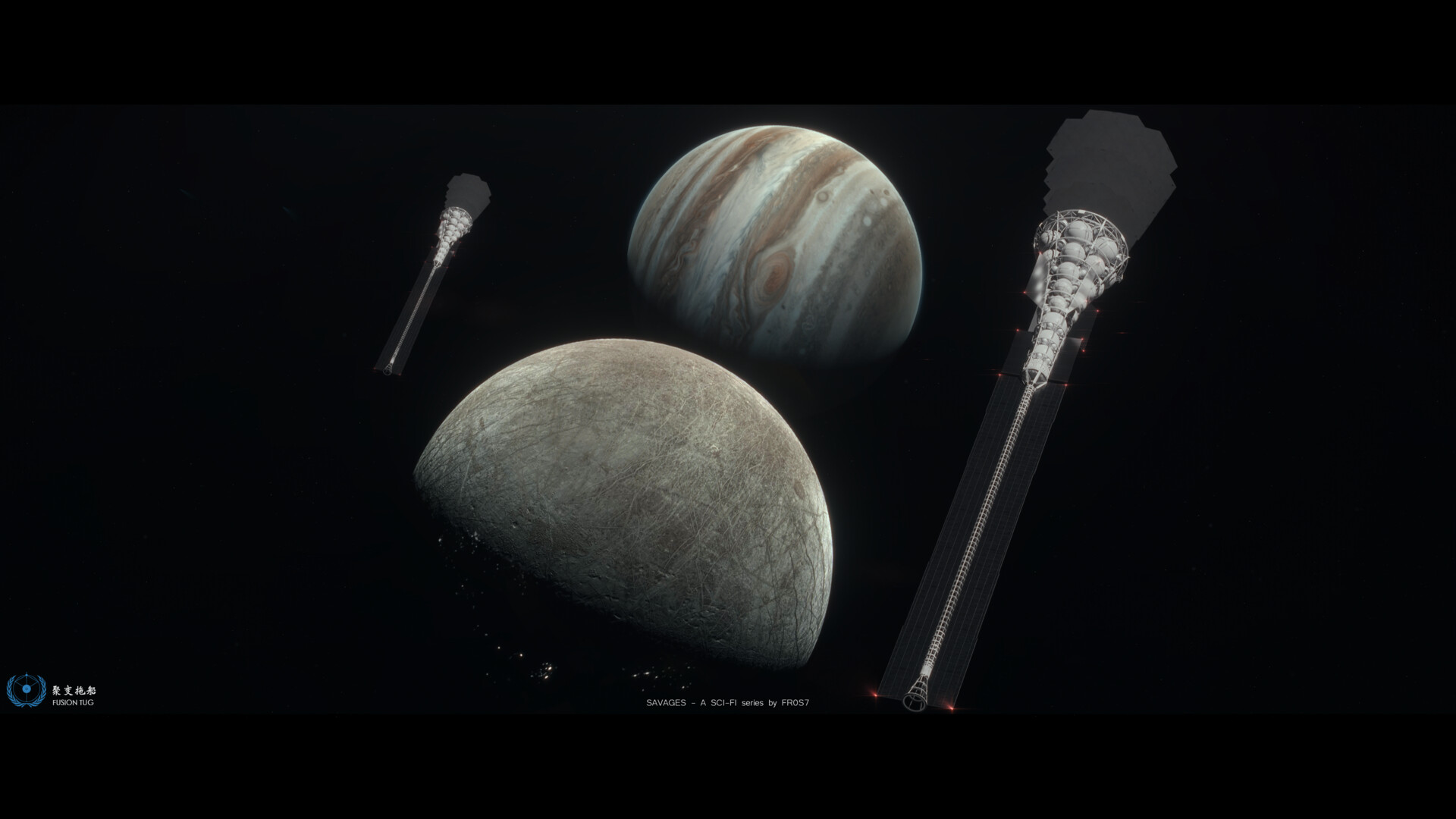
Once the ship arrived at Europa, it will stay for one or two years,waiting for the fuel and propellant to be fully loaded again, then return to Mercury orbit, still under high specific impulse mode, unloaded the cargo for Mercury orbital station


Finally, the empty ship will return to Lunar orbit to complete the mission circle, which could be over 30 years since its departure

cargo