Mиллениум Метель manned solar probe space station
It's a fan art of Sci-Fi novel Full Spectrum Barrage Jamming ,which written by Liu Cixin
Millennium Blizzard manned solar probe space station was built in 1996, and the associated segments were utilized for the construction of the original MIR-3 space station after the cancellation of its construction mission. Originally planned Millennium Blizzard manned solar probe space station as a satellite mothership to support the Venus/Mercury exploration program, however, with new progress in scientific research on the solar environment, the station was used for the Perihelion Space Environment Mission (PESM) and the tank volume was increased to allow access to a circumhelion orbit.

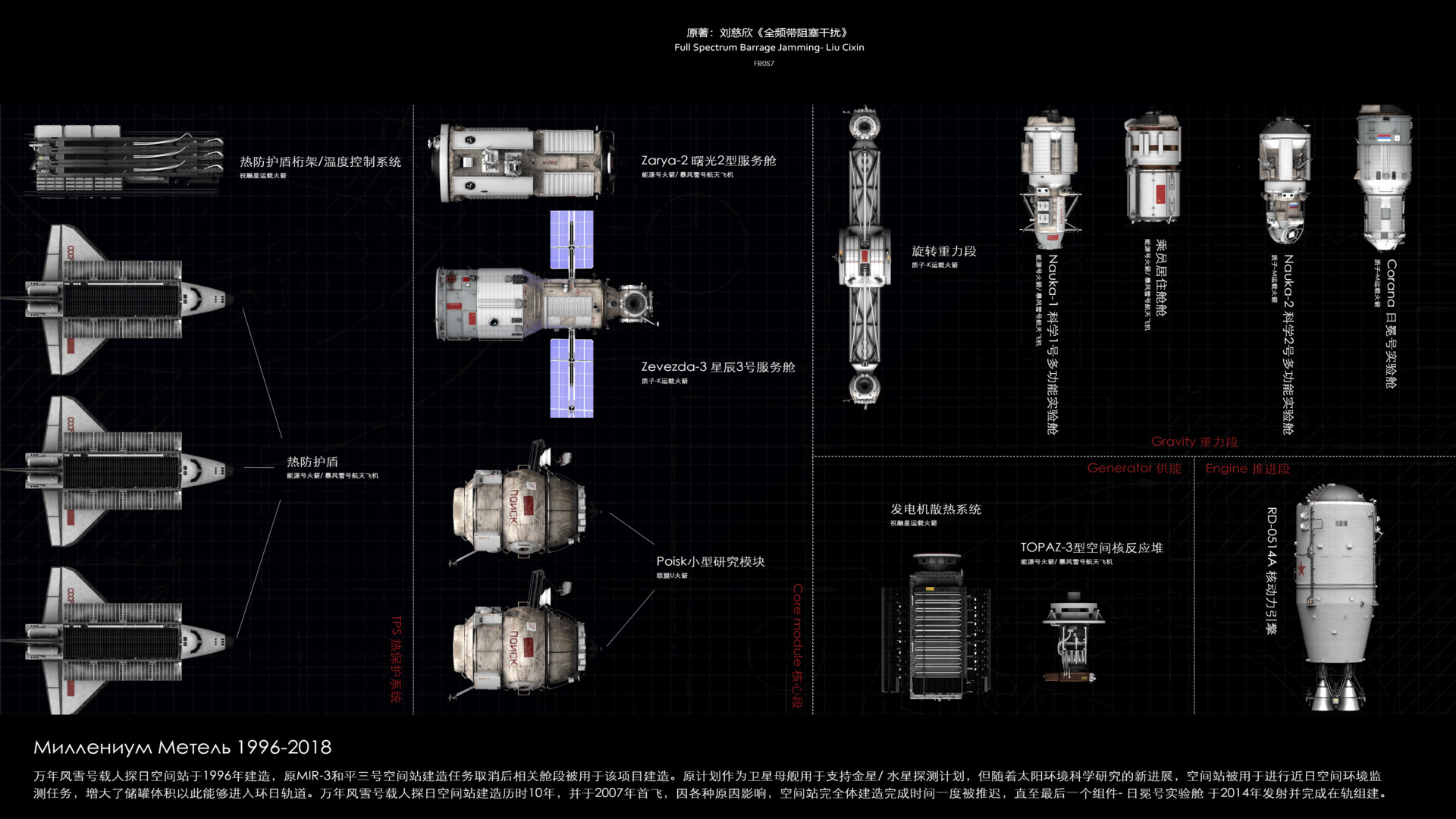
Main modules of the space station and launch vehicles
The first launch missions were the Zarya II service module, which was converted from the Zarya service module of the Mir-2 space station, as there was no relevant docking requirement and the docking node in the head was eliminated

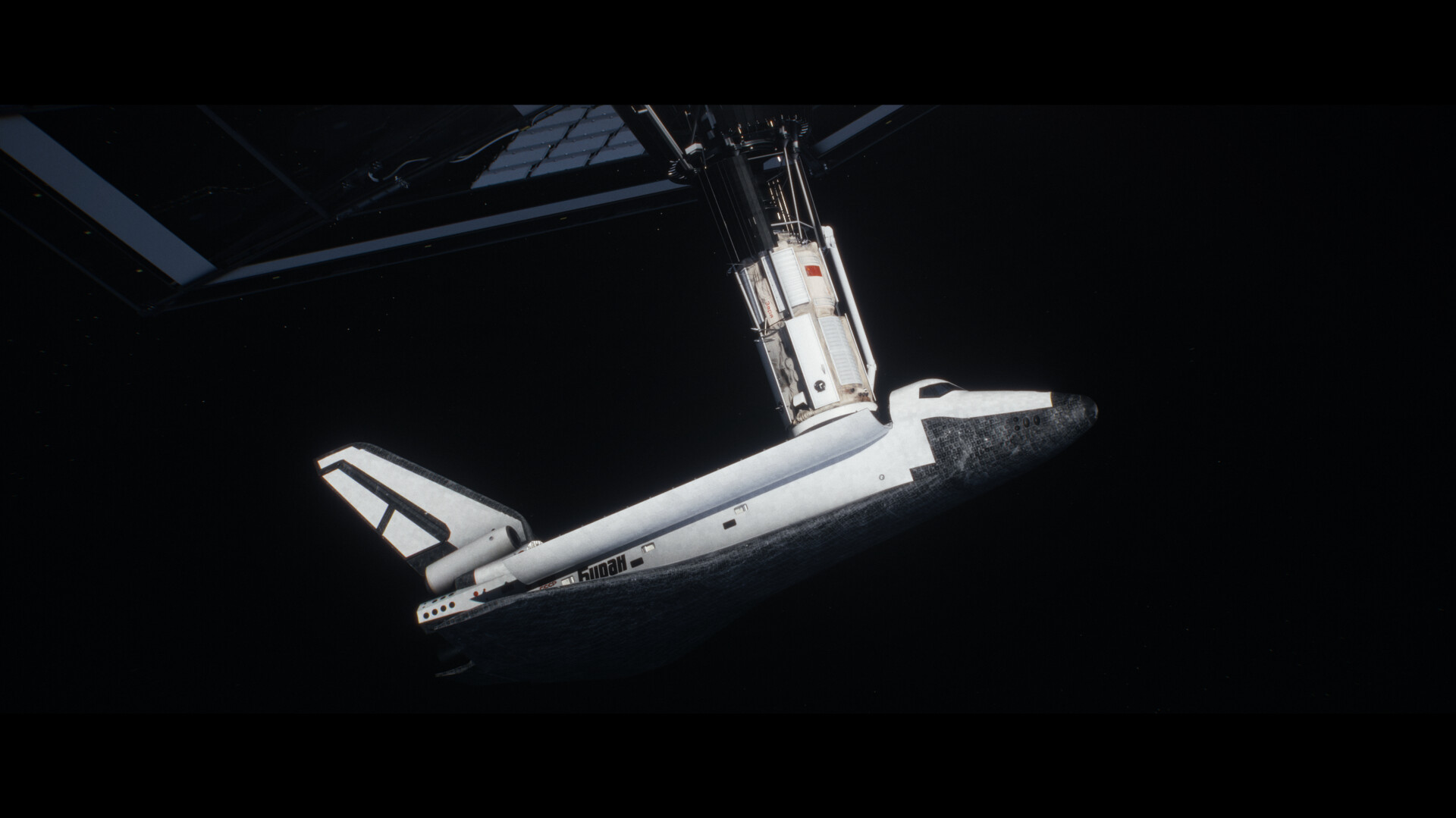
the second module was the Thermal Protection System (TPS) and the thermal shield support truss launched by the Vulcan rocket, followed by three mission launches of the space shuttle buran, then accomplished by 12 people in orbital.

The space nuclear reactor and heat radiation system were launched and assembled by the Buran, Vulcan rocket, then docked in orbit to the core module section and put into use.

The last Space Shuttle mission, which carried the crewed habitation module, the final module of the first phase of the space station was launched at the end of 2006

after the assembly of the module was completed, the station underwent its first test run in late 2007, when the three-member crew returned to Earth after orbiting around the Sun in a circumpolar orbit for one year.

Since 2003, the CCCP economy has been experiencing negative growth, and there was no statistics or reports on the state of the economy have been publicly released in 2006.

Dec 26, 2008, the Supreme Soviet of the CCCP declared that the Soviet Union had ceased to exist, and the crews of the first flight, which returned from high orbit on Dec 30, became the "last Soviets".

As a result of the continued economic downturn after the breakup, Russia stopped development of Vulcan-UKK and the accompanying Titan exploration program, as well as funding for Energia rocket and the launch of 4 Space Shuttles Buran in 2010.

Nauka 1 and 2

In 2010, Roscosmos launched its first space station payload, the Nauka 2 module by Proton-K, which had been constructed in 2008 for assembly after the completion of the first flight but was delayed until 2010.

After stabilizing the economy and the situation, Russia signed infrastructure development projects in Siberia with neighbouring countries, and the economy gradually recovered.

2014, Russia launched the Corona Module, the last module of the staton, and thus the space station had completed all the construction in plan

The station has undergone a total of nine solar environment survey missions, of which 5 were short-term and 4 long-term missions.


Even with NTR, getting into lower solar orbit is still very difficult, it saved DV by slingshotting through Venus' gravity and also releasing Venus probes in the meantime.

Mar 2016, Crimean crisis, NATO launched military action against Russia on April 1, at a disadvantage, the station operated by Sergei Misha crashed at solar orbital perihelion in 2018, triggered a powerful solar storm caused Full Spectrum Barrage Jamming
